
BARIATRIC PROCEDURES
Gastric Bypass Roux-en-y (RNY)
The Gastric Bypass Roux-en-y, often referred to as "Gastric Bypass", is made from more than 50 years ago and the laparoscopic approach was perfected since 1993. It is one of the most common operations and is very effective in treating obesity and Obesity-related diseases.
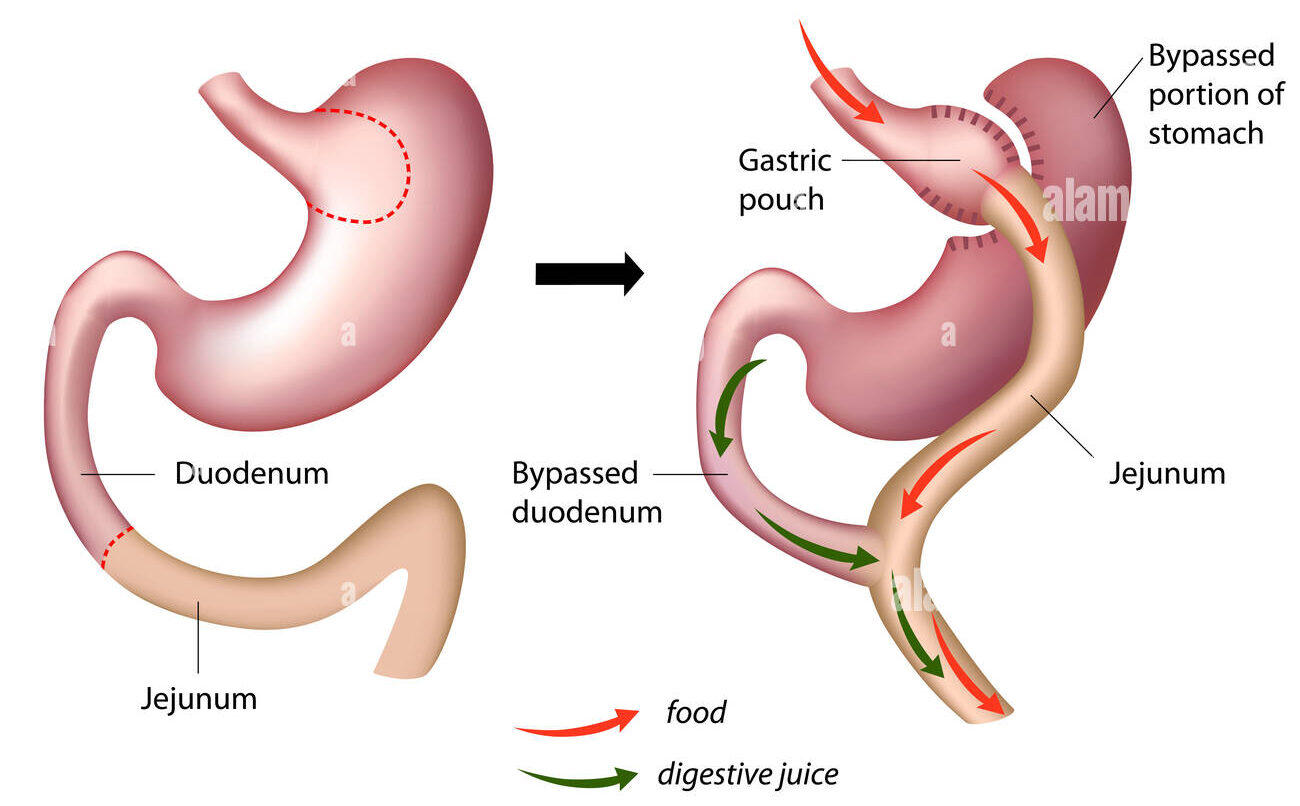
Gastric Bypass Roux-en-y (RNY)
- Procedure
- How it works
- Advantages
1. First, the stomach is divided into a top portion smaller (bag or pouch) that is approximately the size of an egg. The greater part of the stomach is excluded because it does not store or digests food.
2. The small intestine also divides and connects to the new stomach pouch to allow the passage of food.
3. The segment of the small intestine that empties the stomach excluded is connected to the distal small intestine, resulting in a connection of the bowel that resembles the shape of the letter Y.
4. Eventually, the acids and digestive enzymes in the stomach diverted and the first portion of the small intestine is mixed with the food we eat.
The gastric bypass works in several ways. Like many procedures in bariatric surgery, the stomach pouch you just created is smaller and can hold less food, which means that you ingest the least calories. In addition, the food does not come in contact with the first portion of the small intestine, and this results in a decrease of the absorption. What is more important, the modification of the course of food through the gastrointestinal tract have a profound effect to decrease hunger, increase satiety and allow the body to reach and maintain a healthy weight. The impact on incretin hormones and metabolic health often result in an improvement of poorly controlled diabetes and long-time evolution of the adult, even before the weight loss. And mainly, it helps patients with severe gastroesophageal reflux, giant hiatal hernia, esophagitis, severe or Barret's esophagus and, often, together with the right choice of food, the symptoms improve quickly.
Advantages
1. Weight loss reliable and durable
2. Effective for the remission of conditions associated with obesity
3. Technique refined and standardized.
Disadvantages
1. Technically more complex in comparison with the sleeve gastrectomy
2. Most deficiencies of vitamins and minerals that sleeve gastrectomy
3. There is the risk of complications and obstruction of the small intestine.
4. There is the risk of developing ulcers, especially with NSAIDS, or the consumption of tobacco.
5. May cause "dumping syndrome", a feeling of discomfort after eating or drinking, especially sweets.
Please contact us for an assessment
our process
Begin your journey to a better well-being
it is easier than you think with us.

Agenda Your Appointment

Go to the Valuation

Medical Examinations

 English
  Spanish